
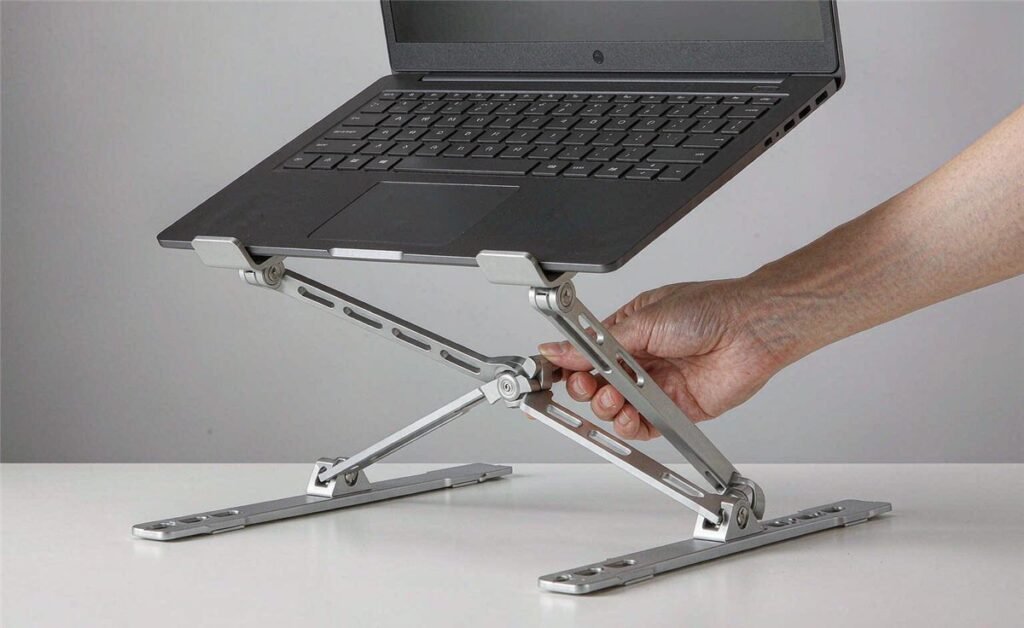
Buying laptop stands for resale looks simple on the surface: find a product, get a price, place an order. But any importer who has received a container of warped aluminum or logo printing that faded after two weeks knows the real cost of choosing the wrong supplier.
Whether you are an Amazon seller, a gift company, or a distributor building your own brand, here are the seven checks we recommend every B2B buyer run before committing to a supplier.
1. Test the sample before you test the price.
A supplier’s quotation means nothing if the product fails in your market. Order a sample and put it through real use: open and close the folding hinge 50 times, load it with a 17-inch laptop, check whether the silicone pads stay in place. A professional supplier will charge for the sample but deduct the cost from your bulk order – that’s standard practice and a good sign they stand behind their product.
2. Ask about the factory behind the product.
Many suppliers are trading companies, and that is not automatically a bad thing – a good sourcing partner works with multiple qualified factories, runs unified quality control, and gives you more product options than any single factory could. The key question is not “are you a factory” but “how do you control quality at the factory?” A reliable partner will explain their inspection process, not dodge it.
3. Confirm the MOQ matches your business stage.
Factory-direct MOQs often start at 1,000-3,000 pcs per model. If you are testing a new SKU, that is capital tied up in inventory risk. Ask suppliers whether they offer lower MOQs – many sourcing companies can accept 100-500 pcs per model because they consolidate orders across buyers. Lower MOQ lets you test demand before scaling.
4. Check the logo customization options.
“Custom logo” can mean very different things: laser engraving on aluminum, silk printing, or a cheap sticker. Ask which methods the supplier offers, request photos of actual customized units (not renders), and confirm the logo position and size options. For laptop stands, laser engraving is the most durable option on anodized aluminum surfaces.
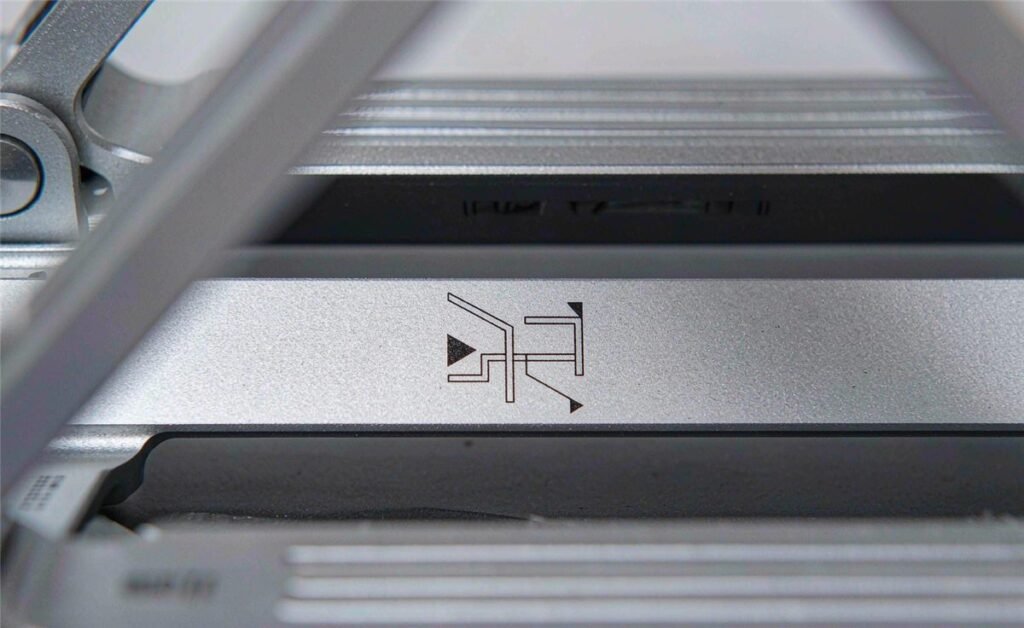
5. Clarify packaging – it matters more than you think.
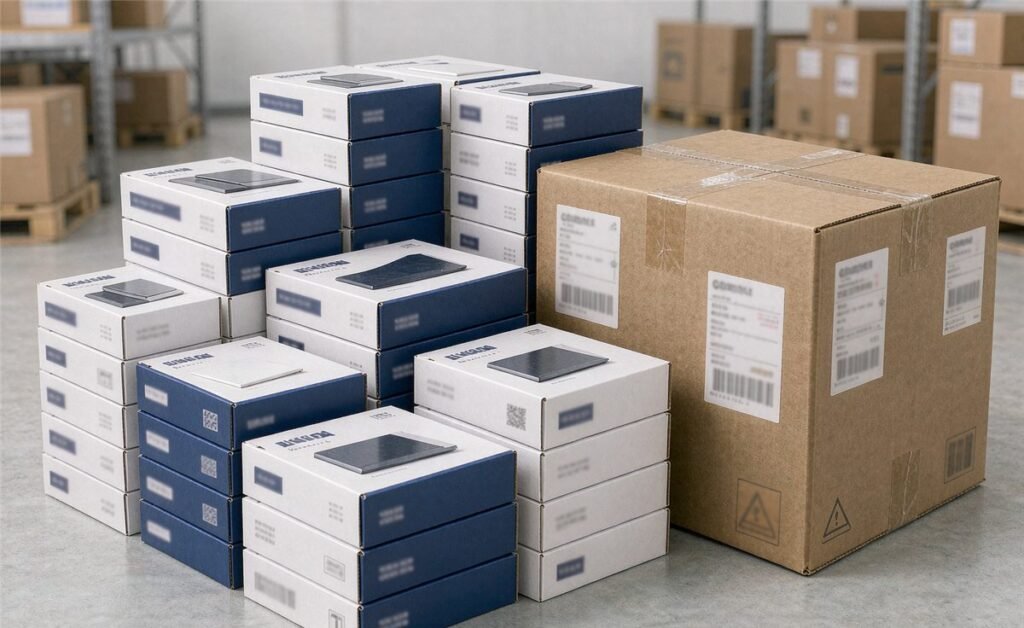
Retail packaging adds cost and volume. If you ship to Amazon FBA, confirm the supplier can pack with FNSKU labels and carton markings. If you sell in retail stores, ask whether they can produce custom color boxes and what the MOQ and lead time for packaging are.
6. Verify communication quality early.
Your supplier relationship is a long-term one. Notice how they handle your first inquiry: Do they reply within 24 hours? Do they answer questions directly or send generic catalogs? A supplier who is vague during the sampling stage will be vague when you have a quality claim.
7. Agree on samples, QC and terms in writing.
Before the deposit, confirm in writing: sample lead time (reputable suppliers offer proofing within 7 days), pre-shipment inspection terms, payment terms, and what happens if goods arrive defective. Clear terms now prevent disputes later.
Final thought
The cheapest quote is rarely the cheapest total cost. A supplier who delivers consistent quality, flexible MOQs and honest communication will make you more money over two years than the 5% you saved on the first order.
If you are sourcing laptop stands and want a partner who handles sampling, logo customization and quality control in one place, check out our 7-level adjustable foldable aluminum laptop stand or browse our full product range – we work with B2B buyers worldwide with low MOQs and 7-day fast sampling.
